Kitchen Cabinet Painting in St. Catharines, Ontario
Sprayed kitchen cabinet painting, refinishing and vanity work across St. Catharines and the Niagara towns. The visit is free and the quote arrives in writing.
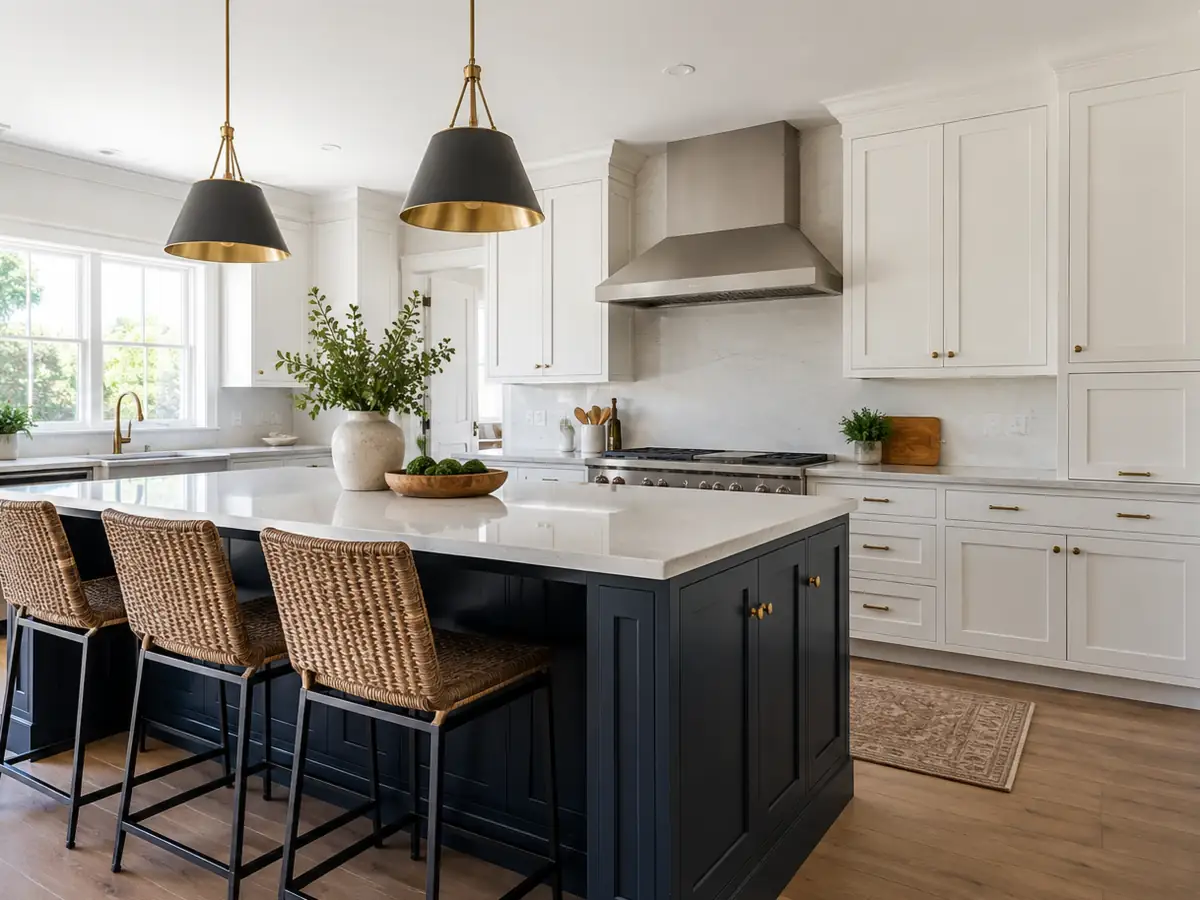
Ready To Keep The Kitchen And Change The Colour?
One call to +1 (905) 367-8017 books a free visit anywhere in St. Catharines or the Niagara towns nearby, with the written quote arriving a day or two later.
Prefer to talk? +1 (905) 367-8017
Monday to Saturday, 8:00am to 6:00pm
Thanks. Your request is in. We will call you within one business day to book the visit. Need us sooner? Call +1 (905) 367-8017.
St. Catharines Cabinet Painting handles kitchen cabinet painting, spray finishing, refinishing, refacing and vanity work for homes in St. Catharines, Thorold, Niagara-on-the-Lake, Welland and the Lincoln towns of Beamsville, Jordan and Vineland. The work is fully insured. Visiting the house costs nothing, the quote arrives in writing, and it spells out door and drawer numbers, the prep each needs, the primer and topcoat, the coat count and the total. Call +1 (905) 367-8017.
Cabinet Painting Services Across St. Catharines
Nine cabinet painting services, from a 1950s bungalow galley to a new condo, cover every kitchen, every vanity and every built-in. Downtown, condo kitchen cabinet painting deals with elevators and building rules.
-
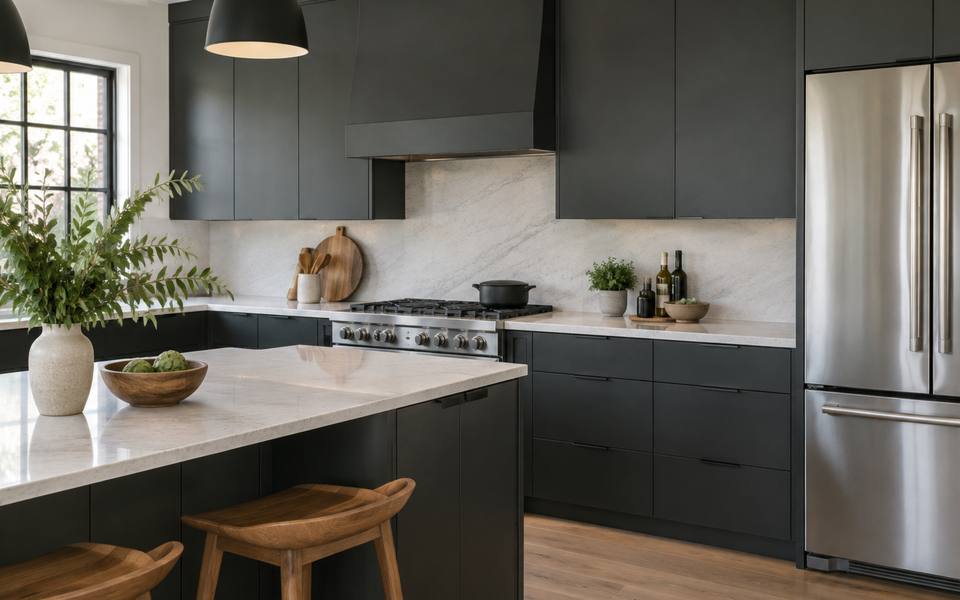
Kitchen Cabinet Painting
Kitchen cabinet painting removes every door, degreases and sands each surface, primes for the material and sprays thin hard enamel coats without replacing a single box.
-
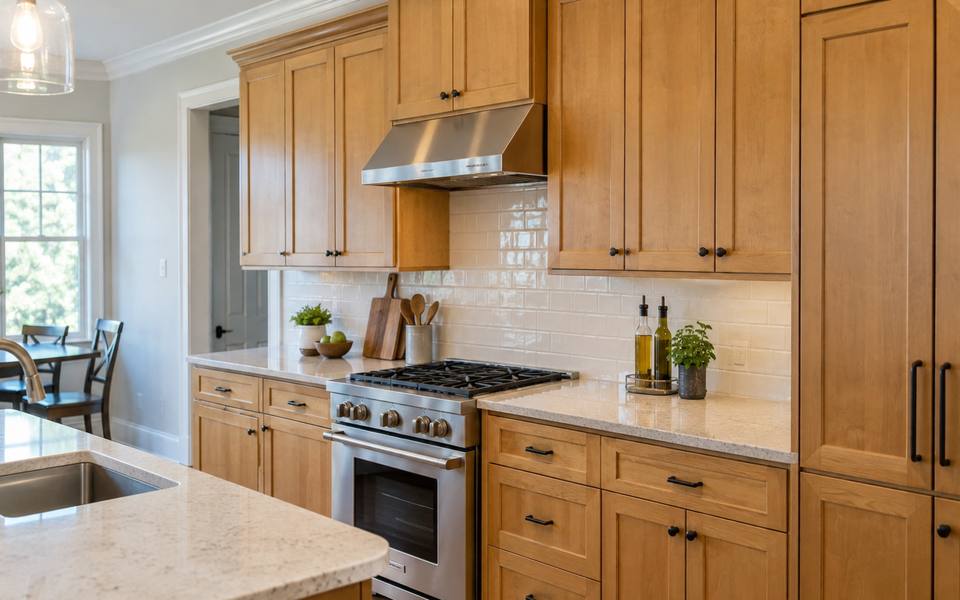
Post-War Bungalow Kitchen Cabinet Painting
Post-war bungalow kitchen cabinet painting restores the birch and plywood slab doors of 1950s to 1970s galley kitchens, with thin veneer, worn hinges and old paint handled with care.
-
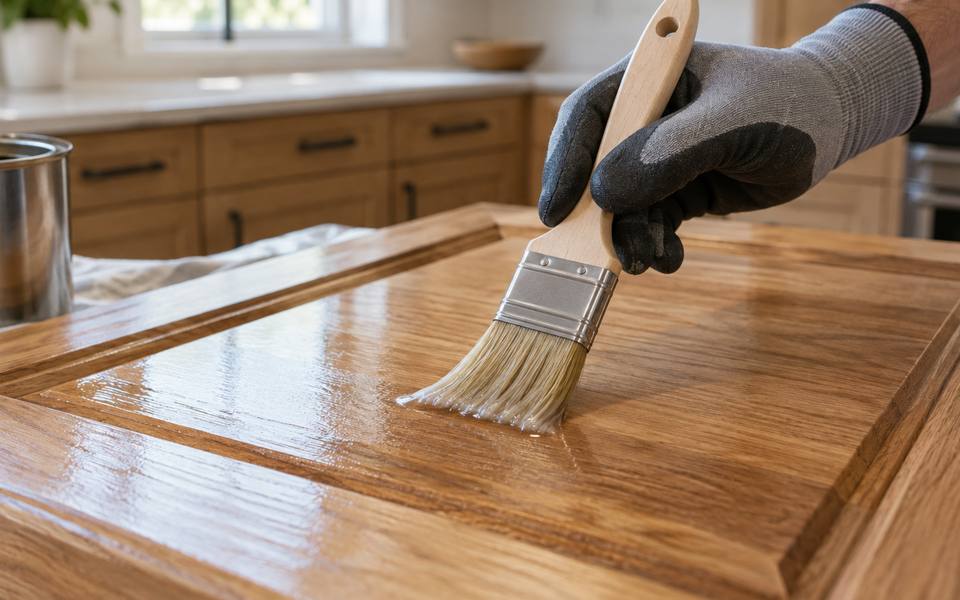
Cabinet Spray Painting
Cabinet spray painting finishes doors in a filtered booth and boxes behind sealed containment, using thin, even coats of enamel or 2K polyurethane that cure hard.
-
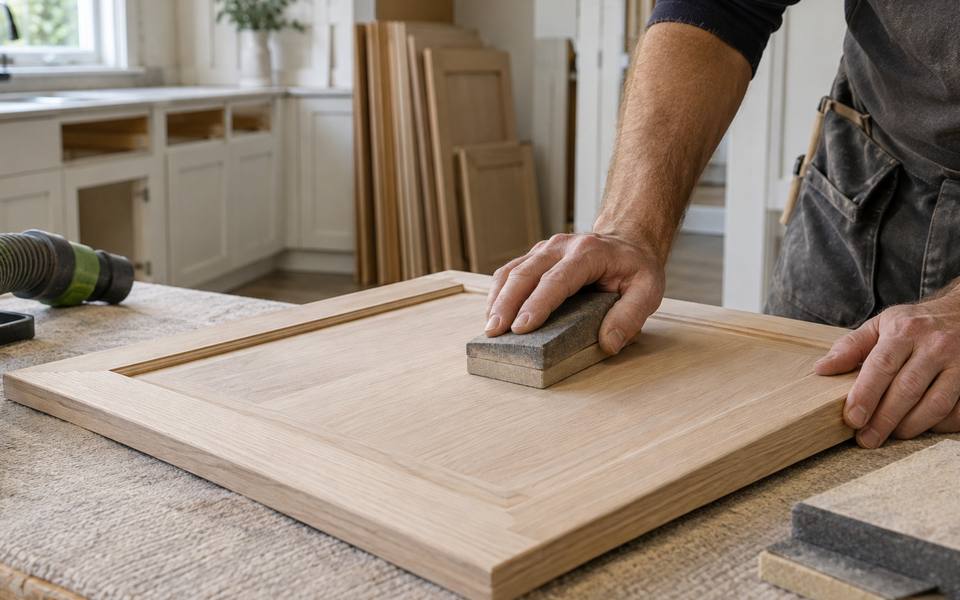
Oak Cabinet Painting
Oak cabinet painting blocks tannin bleed with shellac primer, deals with the open grain by filling it or keeping it, and sprays a hard enamel over 1980s and 1990s doors.
-
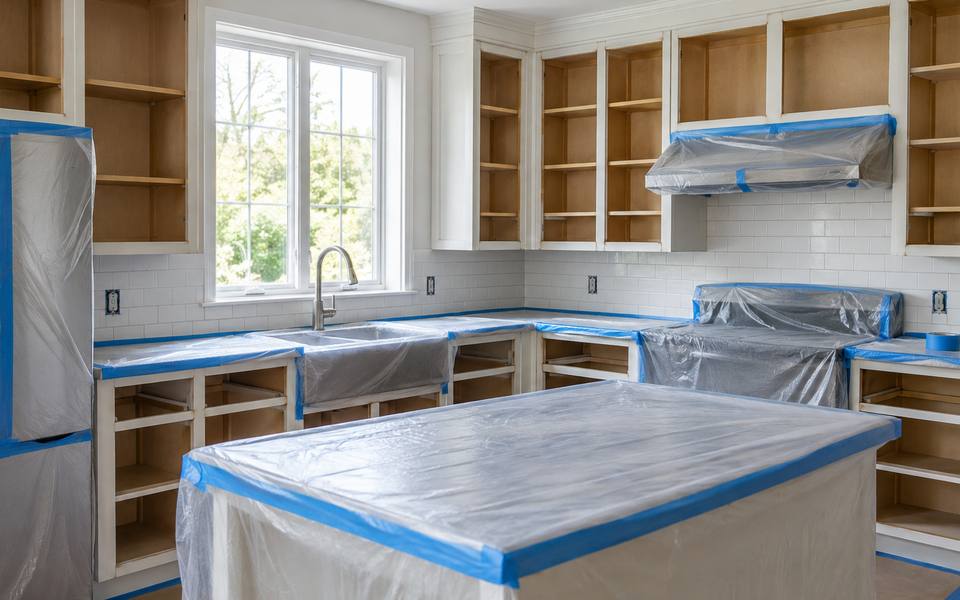
Thermofoil, Melamine and Laminate Cabinet Painting
Thermofoil, melamine and laminate cabinet painting starts with a bonding primer for slick factory surfaces, plus an honest verdict on which doors are worth painting.
-
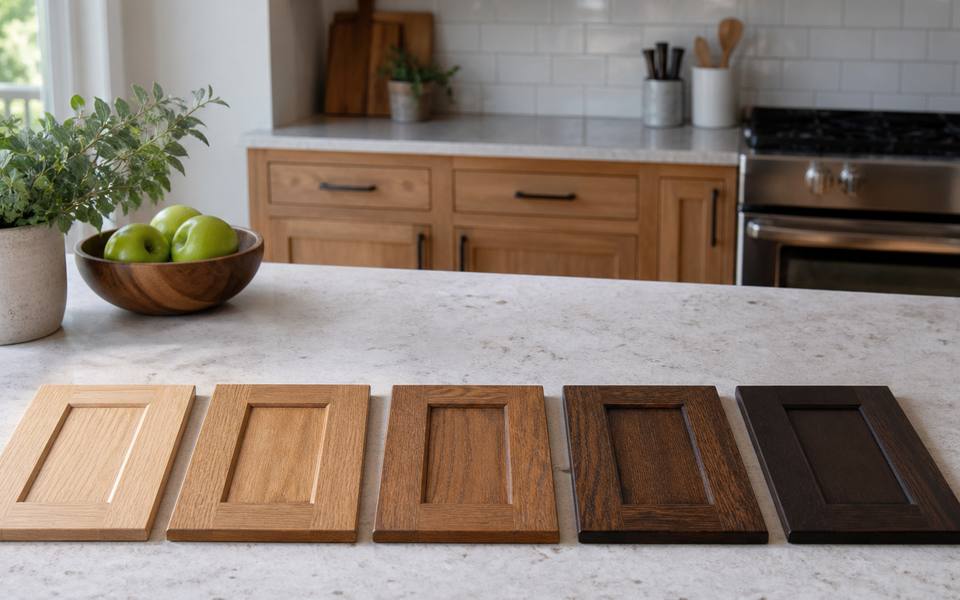
Cabinet Refinishing
Cabinet refinishing keeps the wood. The old finish comes off, new stain goes on and a sprayed clear coat seals it, so solid walnut, cherry or white oak looks new.
-
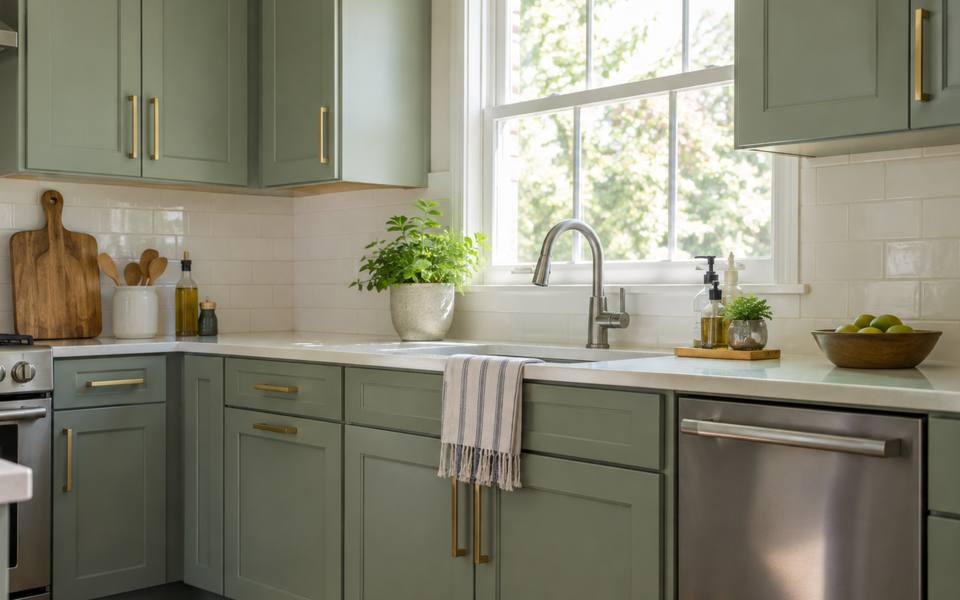
Two-Tone Kitchens and Island Painting
Two-tone cabinet painting puts a painted perimeter beside a darker or wood-toned island, and an island can also be sprayed on its own as a separate job.
-
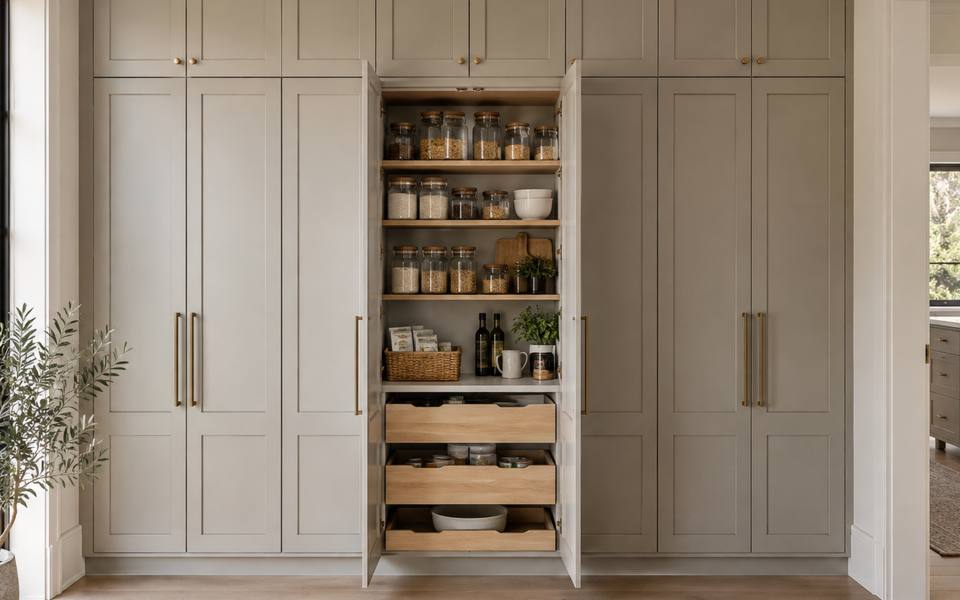
Bathroom Vanity Painting
Bathroom vanity cabinet painting is the smallest job on the list, usually six to ten pieces in one or two days, with a primer and topcoat built for steam.
-
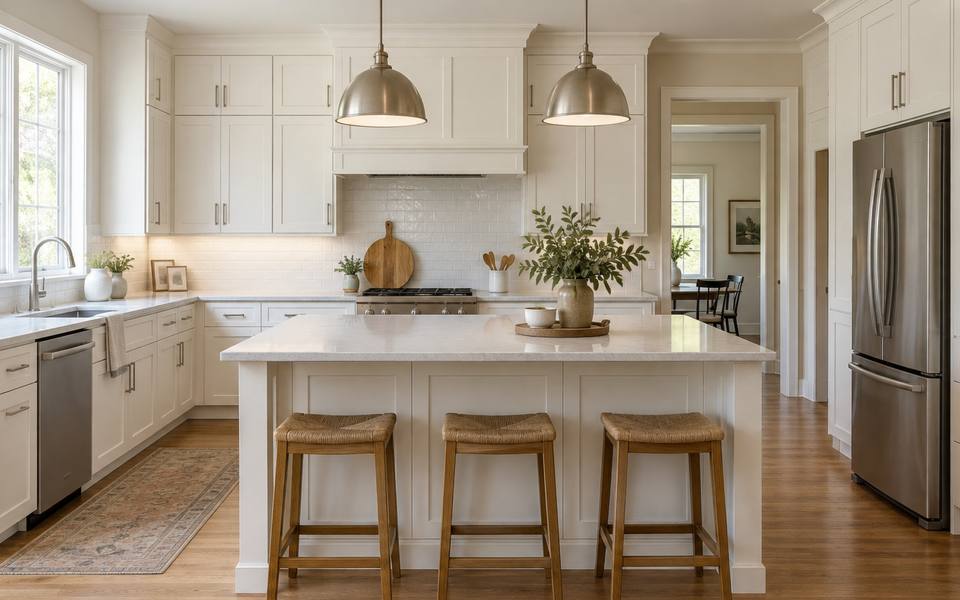
Condo Kitchen Cabinet Painting
Condo kitchen cabinet painting suits small galleys, building rules, elevators and parking, and the doors are sprayed away from the unit so it stays livable.


What Are The Benefits Of Cabinet Painting Over A New Kitchen?
Cabinet painting costs a small fraction of what replacement does. A whole kitchen painted in Ontario usually lands between $2,500 and $5,500, while a new kitchen starts around $15,000 and runs well past $40,000.
Nothing else in the kitchen moves during cabinet painting. Counters, plumbing, backsplash and floor all stay put, which means no demolition and no dust drifting through the rest of the house.
A sprayed cabinet painting finish is smooth and hard. Thin coats of waterborne enamel or 2K polyurethane, sanded between coats, give a surface with no brush marks and no drips.
The colour is yours to pick. Cream, greige, sage, navy and charcoal all come from the same paint decks the showrooms use, and one door gets sprayed first as a sample, so you decide by looking at a real door rather than a chip.
Most kitchens are back in full use within two weeks of cabinet painting starting. Doors are sprayed off site while the boxes are done at home, so in between the kitchen still works, just without its doors.
Solid boxes get another decade or two. Cabinet boxes built between the 1960s and the 1990s are often better made than what replaces them, and cabinet painting keeps them.
Kitchen Cabinet Painting Starts With Degreasing Rather Than Paint
Day one of kitchen cabinet painting is cleaning and labelling, and no paint goes near a door. Twenty years of cooking leaves a film of grease that no primer will stick to, so each door, each drawer front and each box gets washed with a degreaser, rinsed and scuffed to an even, dull surface. Dents get filled at the same stage, along with hardware holes that are not being reused.
Then the primer goes on, matched to the material: shellac for oak and stained wood, a bonding product for melamine or laminate, and a regular high-build primer for MDF that was painted before. Two or three thin topcoats follow, each one lightly sanded before the next. The kitchen cabinet painting page walks through every step, how long it takes and what it costs.

Golden Oak Kitchens From The 1980s And 1990s Take Cabinet Painting Well After The Grain Is Dealt With
Oak takes paint well as long as two things happen first: the tannins get sealed with shellac, and a decision is made about the open grain, filling it or leaving it. Skip the shellac and pink or yellow blotches bleed through a white finish within weeks. Skip the grain fill and the finish shows the oak's texture through the paint, which some people like and others do not.
The subdivisions around Vansickle and Rykert, Grapeview and Fairview were built or re-kitchened in the golden oak years, so this is the most common cabinet painting job in the west end. Oak cabinet painting covers grain fill, tannin bleed and whether to go smooth or let the grain show.
What Cabinet Painting Costs In St. Catharines
Five things set the price: door and drawer numbers, their material, grain fill on oak, how dark the colour is, and whether there is an island or a second colour. These are Ontario market ranges for 2026.
Those figures describe the market. The price for your kitchen is the one in the written quote after the free visit.
- Small galley or condo kitchenFewer doors and a simple colour change From about $1,500
- Whole kitchen, typicalSet by door count, material and colour $2,500 to $5,500
- Large or two-tone kitchen with islandMore pieces and a second colour $6,000 to $9,000 and up
- Per door, cabinet painting onlyA rough guide, not a quote $130 to $250
- Island on its ownDepends on door count and colour depth $900 to $2,000
- Bonding primer on melamine or thermofoilShown as its own line on the quote Adds $150 to $400
Why Choose St. Catharines Cabinet Painting
Doors Sprayed In A Booth
Doors travel to a filtered spray booth while the boxes are sprayed at home behind sealed plastic. That split gives cabinet painting a factory look instead of one that merely looks painted.
Primer Chosen For The Door
Shellac goes on oak, bonding primer goes on melamine and laminate, and a high-build primer goes on painted MDF. Every surface is degreased and sanded first, so the primer has something clean to grip.
Four Common Failures Avoided
Cabinet painting fails when grease is trapped under the paint, the primer is wrong, coats go on too heavy, or the kitchen returns to hard use too soon. The job is built around avoiding all four.
A Written, Line-By-Line Quote
The quote counts every door and drawer front, describes the prep, and names the primer, the topcoat and the coat count. Two quotes written this way can be compared line for line.
How A Cabinet Painting Job Runs
Visit And Written Quote
We visit the house, count doors and drawer fronts, and look at their material and wear. Colour gets talked through. A written quote arrives a day or two later, setting out the count, prep, primer, topcoat, coats and price.
Prep And Protect
Day one is labelling, photographing and removing the doors and drawer fronts. Everything is then degreased, sanded and filled. The kitchen is masked off with plastic and tape so dust and spray stay where the work is.
Doors To The Spray Booth
The doors go to the spray booth for primer and two or three thin topcoats, with sanding between each coat. Thin, even coats are what give the finish its smooth, hard, factory look on every door.
Boxes Sprayed On Site
The cabinet boxes and face frames get the same primer and topcoats at home, behind sealed plastic containment. Using one system on doors and boxes keeps the colour and the sheen matched across the whole kitchen.
Rehang And Walk-Through
The doors come back, the hinges are adjusted, any new hardware is drilled and fitted, and the kitchen is cleaned and unmasked. A walk-through with you covers the cure period and how to clean the finish.
Post-War Bungalows In The North End Have Kitchens Worth Keeping
The 1950s to 1970s bungalows, backsplits and sidesplits along Lake Street, Vine Street and through Port Weller, Secord Woods and Merritton were built for GM and canal workers, and most of their kitchens are still original or wear a 1980s oak replacement. The birch and plywood slab doors of that era are plain, solid and thin-veneered, which makes them good candidates for cabinet painting and poor candidates for aggressive sanding.
Previous DIY paint that is peeling has to come off before new cabinet painting goes on. Wobbly hinges are replaced, and hardware holes from old pulls get plugged and redrilled. The post-war bungalow kitchen cabinet painting page covers keeping the mid-century look or going shaker white.
Peeling Thermofoil Cannot Be Painted, But Intact Thermofoil Can
Thermofoil already lifting at its edges will not re-stick under paint, and no primer changes that. The vinyl skin has let go of the MDF underneath, usually from dishwasher steam or the heat beside a range, and the only honest fixes are stripping the door to the MDF or replacing it. Intact thermofoil, along with melamine and laminate, accepts cabinet painting well once a bonding primer has gone on.
Kitchens in Martindale, Grantham and the newer pockets of Western Hill often have these builder doors, and cabinet painting them starts with the bonding primer. The thermofoil and melamine page explains what can be painted, what has to be replaced first, and why the bonding primer is not optional.
Brushed Cabinet Painting Shows Every Stroke And Sprayed Cabinet Painting Shows None
A brushed door has ridges and a sprayed door does not, and on a slab or a shaker panel you can see the difference from the doorway. Spraying also lays the paint on in thin, even coats, which is what lets a two-part polyurethane or an enamel cure hard instead of staying soft under a thick brushed film.
The doors and drawer fronts ride to the spray booth. Face frames and boxes get sprayed at home inside a sealed plastic enclosure with every vent masked. Cabinet spray painting covers the booth, the containment, the products and the cure times.

Bathroom Vanities Are Cabinet Painting Jobs That Take A Day Or Two
A vanity is only six to ten pieces, so a day or two covers it, and it is often bundled with the kitchen. The catch is moisture: a bathroom vanity lives beside a shower, so the primer and topcoat need to stand up to steam, and the doors need their full cure before the bathroom sees daily use again.
Bathroom vanity painting is the smallest job we quote and a good way to look at the finish in your own house before committing to a whole kitchen. Vanities in the century homes around Yates Street and the downtown often carry several old paint layers, which changes the prep.
Refinishing Keeps Wood That Is Worth Seeing, And Cabinet Painting Covers Wood That Is Not
Cabinet refinishing removes the old finish by stripping or sanding, puts on fresh stain and locks it under a clear coat, which is the right call for walnut, cherry or white oak doors that would be a shame to paint. It is also the right call when the doors are solid but the finish has gone cloudy, scratched or orange with age.
Cabinet refinishing sets out where refinishing wins over cabinet painting and where it loses. The executive homes of Old Glenridge and the ravine lots of Power Glen hold a lot of solid-wood kitchens where refinishing is the better answer.
The Island Can Be Navy, Green Or Wood While The Perimeter Goes White
A two-tone kitchen pairs a painted perimeter with an island in a darker colour or in stained wood, and it is one of the most common requests in cabinet painting right now. The island can also be done by itself as its own cabinet painting job: a six-door island in navy or forest green can be sprayed on its own when the perimeter is fine.
The island page covers colour pairing and how the two finishes meet. Picking the actual colours is its own step, and cabinet colour consultation covers sample doors, sheen, and how a warm white reads under the north light of a Port Dalhousie kitchen against a south-facing one in Martindale.
Recent Cabinet Painting Work
Oak kitchens, navy islands, refinished walnut and white shaker galleys, each one sprayed to the finish the quote promised.


How Other Cabinet Painting Crews Handle St. Catharines
Other Crews Serving Nearby Communities
Property owners near St. Catharines sometimes compare notes with crews working the Kingston market — cabinet painting in Kingston takes a similar approach to color consultations and cabinet prep, which is a useful reference point when you're deciding what finish to ask for.
If your search for cabinet painters extends beyond St. Catharines, cabinet painting contractors in Newmarket covers the Newmarket market with a comparable process: degreasing, sanding, priming, and a sprayed or brushed topcoat depending on the kitchen.
For anyone comparing cabinet painting companies across Ontario, cabinet refinishing services in Kitchener handles the Kitchener area with the same emphasis on durable, sprayed-on finishes that we use for jobs in and around St. Catharines.
Property owners near St. Catharines sometimes compare notes with crews working the Markham market — Markham cabinet painting specialists takes a similar approach to color consultations and cabinet prep, which is a useful reference point when you're deciding what finish to ask for.
Barrie homeowners researching cabinet refinishing often turn up professional cabinet painters in Barrie, and it's worth a look: the same emphasis on a dust-controlled workspace and a factory-style topcoat applies whether the kitchen is in Barrie or St. Catharines.
Request an Estimate, see our full service list, or read how we coordinate with insulation and other trades on a bigger renovation.
Cabinet Painting Questions
How much does cabinet painting cost in St. Catharines?
Across Ontario in 2026, most whole kitchens come in somewhere from $2,500 to $5,500, a small kitchen can start near $1,500, and a large or two-tone kitchen runs $6,000 to $9,000 and up. Door count, substrate, grain fill and colour depth move the number. Your kitchen's own price is the one written down after the free visit.
How long is the kitchen out of action during cabinet painting?
The doors spend seven to ten days away being sprayed and cured, and the boxes need two, maybe three, days at the house. Between those, the kitchen keeps working without its doors, so the stove, the sink and the fridge stay in use. Plan on roughly two weeks start to finish.
Can 1980s oak cabinets be painted without the grain showing?
Yes, when grain filler goes on twice or three times and gets sanded smooth ahead of the primer. Without it the finish is still sound but the oak texture shows through, which is a look some people prefer. The shellac primer goes on either way, because that is what stops tannin bleed.
Does the finish chip where hands and cutlery drawers hit it hardest?
Those are the two highest-wear spots in any kitchen, and a thin, fully cured sprayed cabinet painting finish holds up there far better than a thick brushed one. The finish is hard to the touch in a day but keeps hardening for two to four weeks, so we ask for gentle use over that period.
Is the work insured?
Yes. The work is fully insured, and the insurance covers every cabinet painting job from the day the doors come off to the final walk-through. Some condo buildings ask for an insurance document before a trade works in a unit, and we can supply one when the building asks.
Serving St. Catharines, Thorold, Niagara-on-the-Lake And The Lincoln Towns
The whole city is in range, from Port Dalhousie and the north end through Grantham, Fairview and the downtown to Western Hill, Vansickle, Martindale, Glenridge, Secord Woods and Merritton, and out to Thorold, Niagara-on-the-Lake, Virgil, St. Davids, Beamsville, Jordan, Vineland, Niagara Falls and Welland. Cabinet painting in a wine-country farmhouse near Jordan and in a new build off the QEW is the same job with different doors. Send the address and the visit gets confirmed.
- St. Catharines
- Thorold
- Niagara-on-the-Lake
- Virgil
- St. Davids
- Beamsville
- Jordan
- Vineland
- Niagara Falls
- Welland
Talk to us about your cabinets
Call +1 (905) 367-8017 or use the form near the top of this page. The visit and the written quote are free.